
AI assistant and coach in the TinQwise learning platform
You build the assistant. Your whole team gets help from it every shift.
With the TinQwise learning platform you make your own AI assistants and coaches. You fill them with your own protocols, work instructions and onboarding plans. We make sure they help like a good colleague would: with a question back, a chance to practise and the source to hand.
How you make it
How you make an assistant or coach
You don't need any technical knowledge. You add your own material, you choose the tone and you decide what it talks about.
Your material goes in
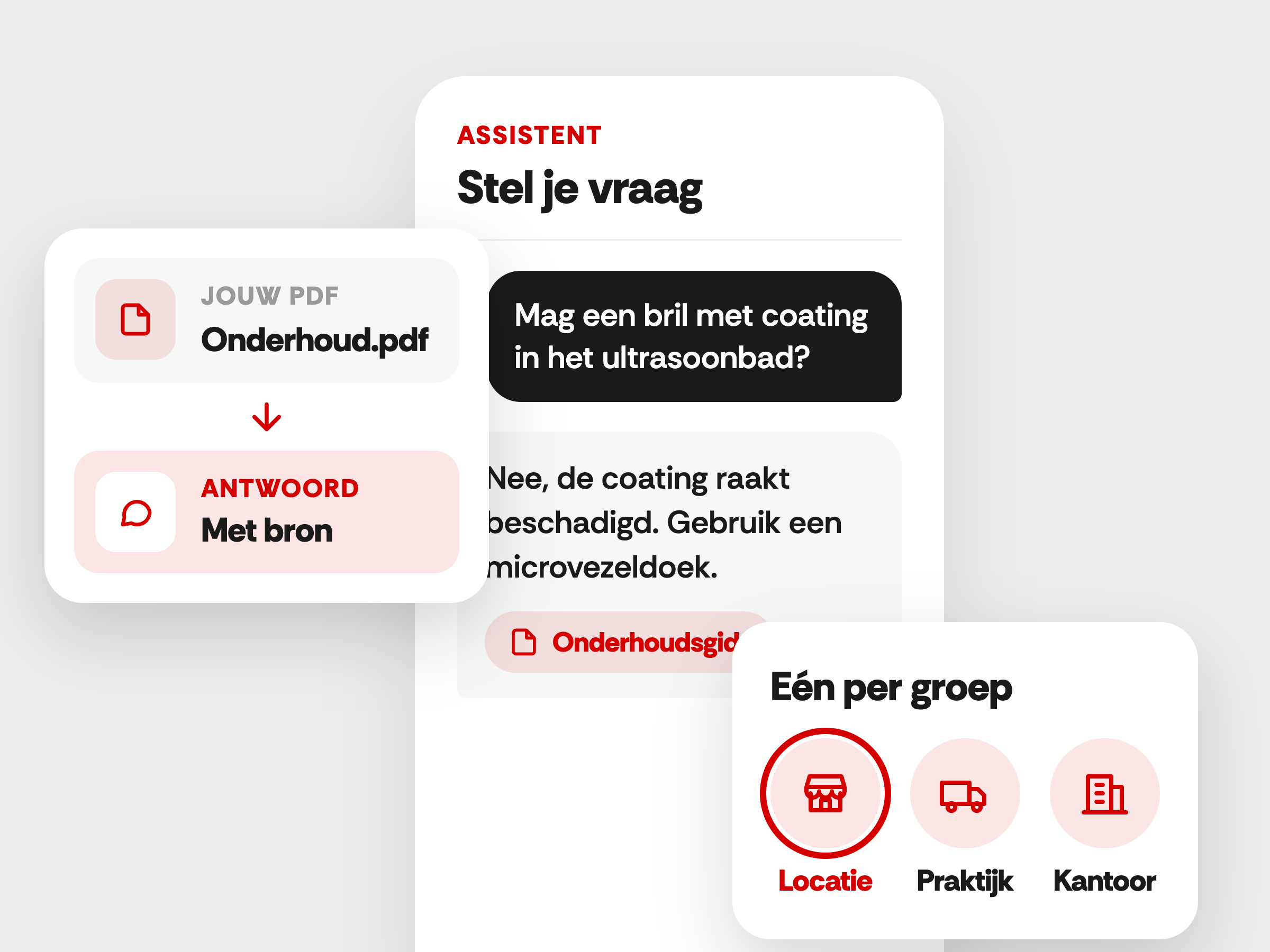
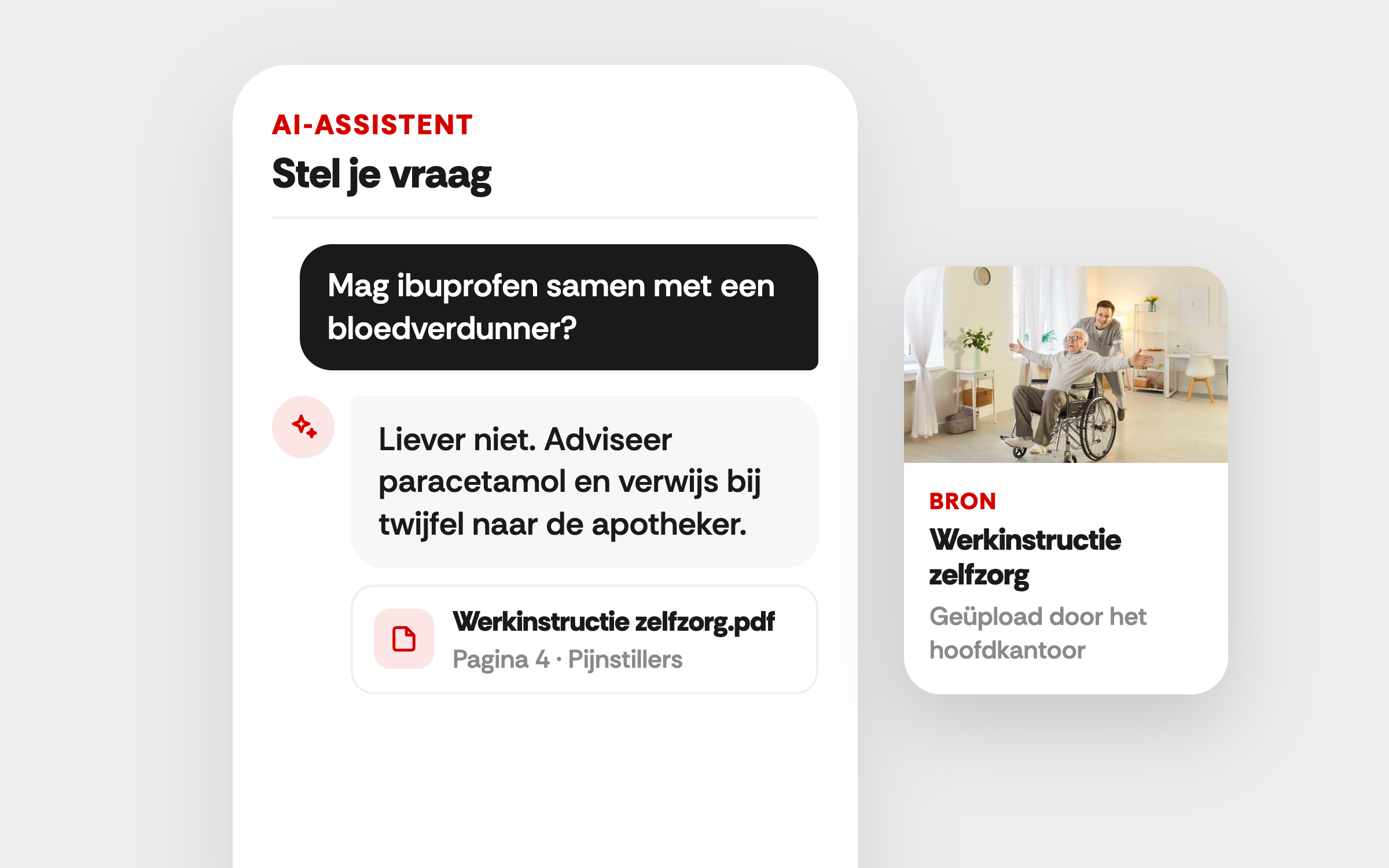
Add your protocols, work instructions, documents and existing activities. The assistant answers from them and shows the source. So a colleague can always check where an answer came from.
You set the tone and the limits
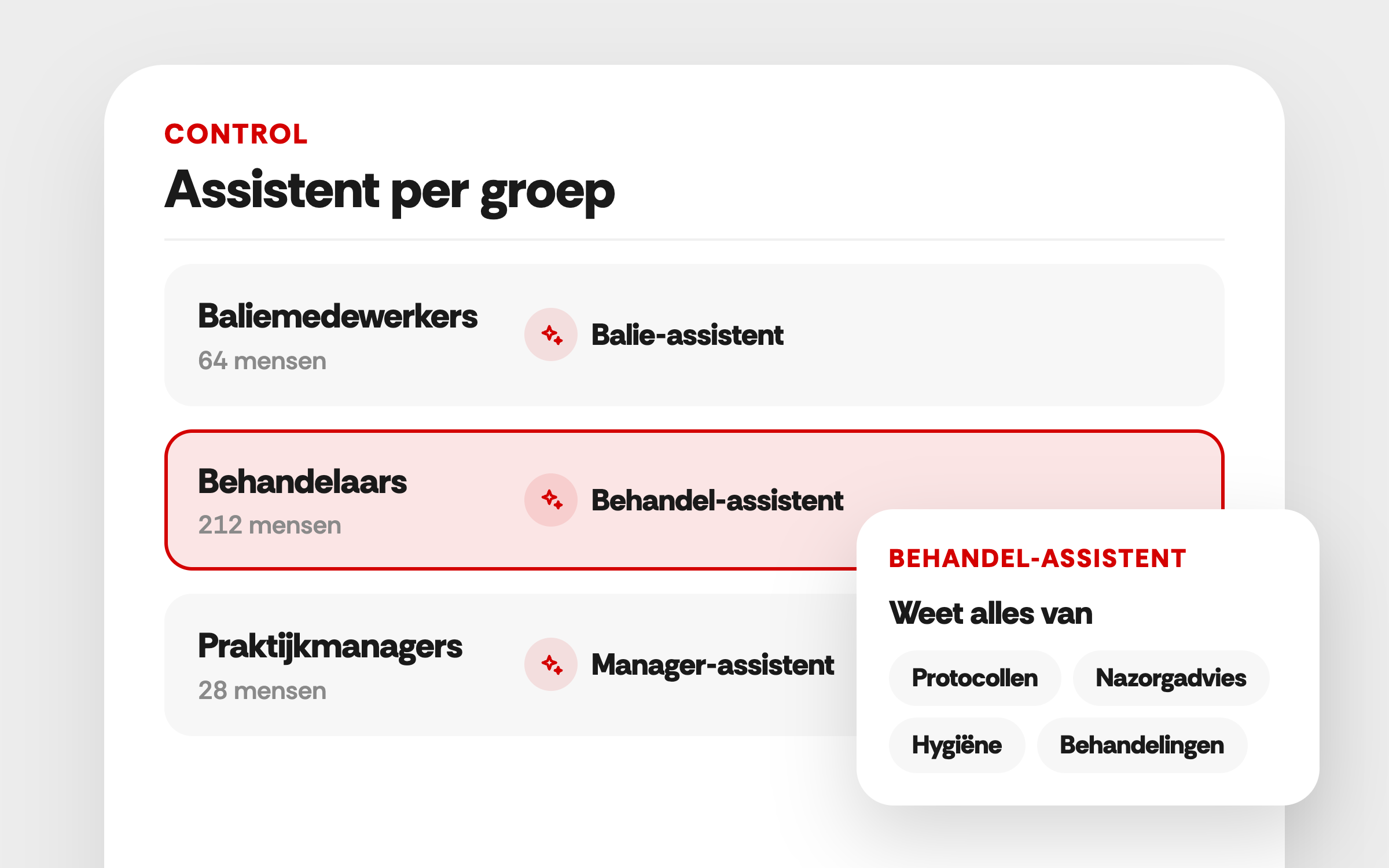
Does it sound like your organisation? May it talk about HR policy, or only about the way of working at the location? You set that yourself. You give each role or group its own assistant, so the information fits the work and the agreements that go with it.
An assistant or a coach
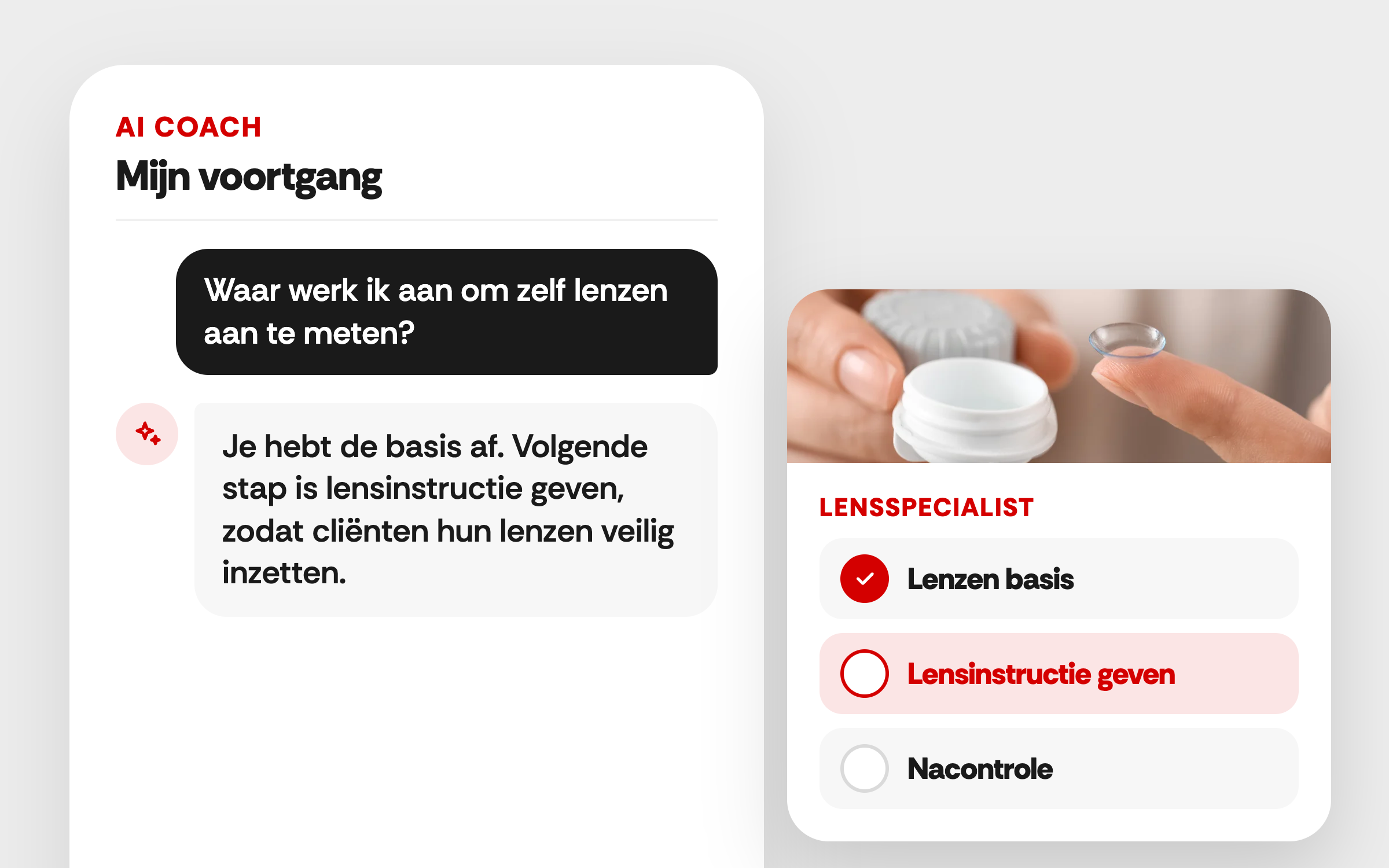
The AI assistant helps with questions about your way of working. The AI coach follows a colleague's own learning route and helps them find the next step.
What we put in
Thirty years of learning design, built in
An assistant that only gives answers doesn't make anyone wiser. So our experience of how people learn is built into TinQwise AI from the start. You don't have to do a thing for it.
It asks a question back
A colleague doesn't just get handed the answer. The assistant first asks what they think themselves. That way it sticks.
It lets you practise
After an answer a colleague can practise straight away. With a short question or by acting out a conversation, until it's second nature.
The source is right there
Every answer shows which protocol or work instruction it came from. A colleague can read it for themselves and knows where to find it next time.
Where you use it
Wherever your team has a question
You make an assistant for the place where it helps most. Here are four places where care teams use it.
During a shift
How do we do the handover here?
A stand-in colleague looks for the agreements at this location. The assistant explains them from your own material and shows the source.
During onboarding
Helping a new colleague find their feet
A new colleague has lots of questions in the first few weeks. The assistant answers them from your onboarding plan and protocols. So experienced colleagues don't have to explain everything over and over.
As a practice coach
How do I prepare this conversation?
An employee wants to get better at conversations with parents. They practise the conversation with the coach first and get fitting learning content to keep practising with.
For their own learning route
What do I still need to complete?
A colleague wants to move on with their own learning route. The AI coach sees where they are and helps them find the next learning activity.
Your learning specialist
Your learning specialist builds it with you
You're not on your own. One of our learning specialists helps you set up your first assistant and keeps an eye on things with you afterwards.
Step 1
Choosing where to start
Together we choose where an assistant helps most. Often that's the question colleagues ask every shift.
Step 2
Getting your material in order
We look at which protocols and work instructions need to go in, and what's still missing or out of date.
Step 3
Fine tuning together
Once the assistant is live, your learning specialist keeps watching with you. If something isn't working the way you want, you adjust it together.
Proof from practice
How care organisations support their people on the job

With HEP in practice and infection prevention, TopMondzorg oral care professionals practise what they apply in the treatment room every day.
Care staff find Noordhoff Health and GoodHabitz learning in their own academy, at the moment they need it.

Oogwereld opticians look up product knowledge on Varilux, Eyezen and Visioffice while they help a customer.
Bring your toughest protocol question
Bring a work instruction and a question that often comes up about it. We'll show you how to make an assistant and how it answers from your own material.